Fergie Jenkins Gets Emotional as Cubs Unveil His Statue at Wrigley Field
On a sunlit afternoon in Chicago, history and gratitude came together on the corner of Clark and Addison. In front of Wrigley Field’s famous “Statue Row,” thousands of fans gathered to honor one of the greatest pitchers ever to wear a Chicago Cubs uniform: Ferguson “Fergie” Jenkins.
As the bronze covering was pulled away, the crowd erupted into cheers, revealing a larger-than-life sculpture of Jenkins in his signature pitching stance. For a moment, the 79-year-old Hall of Famer stood in silence, staring at the monument that will now forever join the statues of Cubs legends like Ernie Banks, Ron Santo, and Billy Williams. The emotion in his eyes told the story: this was not just about baseball, but about a life lived in dedication to the game and to the city that embraced him.

“Not everyone is lucky enough to see their own statue while they’re alive,” Jenkins said softly, his voice cracking as he addressed the sea of fans. “To stand here today, with my family, my teammates, and all of you—it means the world to me.”
The Canadian-born Jenkins joined the Cubs in 1966 and quickly became one of the most dominant pitchers of his era. Over a 19-year Major League career, he won 284 games, struck out over 3,000 batters, and became the first Canadian ever inducted into the Baseball Hall of Fame. Yet, beyond the numbers, it was his resilience, consistency, and quiet dignity that made him a beloved figure in Chicago.
For fans, the statue is more than just bronze—it is memory cast in metal. “I used to come to Wrigley with my father just to see him pitch,” said longtime Cubs fan Michael Rodriguez, standing near the ivy-covered walls. “He had this calm on the mound, like nothing could shake him. Seeing his statue here brings all of that back.”
Family members stood proudly nearby, tears streaming down as Jenkins waved to the crowd. “This is not only about Fergie the ballplayer, but Fergie the man,” said his daughter, Kelly. “He worked so hard, carried himself with such humility, and always remembered where he came from. To see him honored like this—it’s overwhelming.”
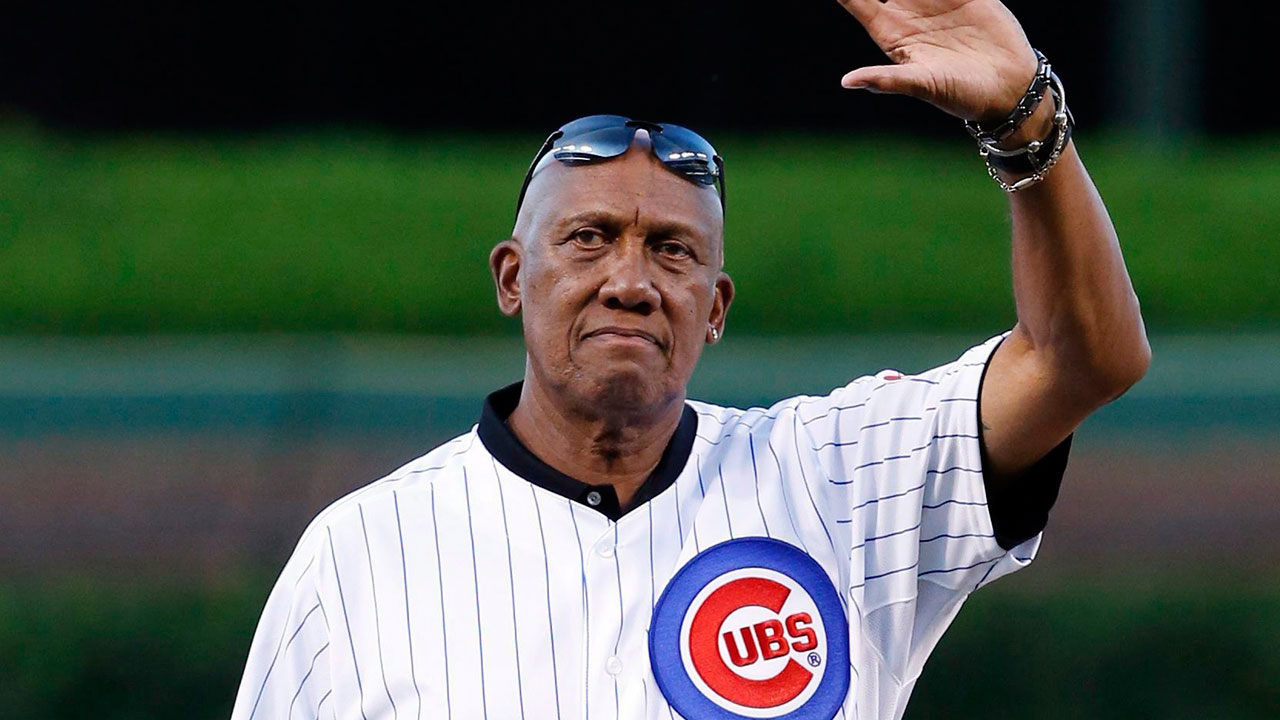
Throughout the ceremony, memories flowed. Former teammates recalled the countless complete games Jenkins threw, his legendary control, and his willingness to carry the weight of the team on his shoulders. Cubs officials praised him as both a trailblazer and an ambassador for the sport.
Yet, the most moving part of the day came not from statistics or speeches, but from the quiet reflection on what it means to be remembered. For Jenkins, seeing his likeness immortalized in bronze was not about glory, but about gratitude—for the fans, for the game, and for the city that became his second home.
“This is where my heart is,” Jenkins said, placing his hand on his chest. “Every time I walked out to that mound, I wanted to give the fans everything I had. And today, standing here, I feel like you’ve all given me everything in return.”

The crowd responded with chants of “Fer-gie! Fer-gie!” echoing across Wrigleyville, a reminder that heroes are not only remembered in record books but in the hearts of those they inspire.
As the ceremony ended, sunlight glinted off the bronze figure, casting a shadow across the ballpark that has seen generations of triumphs and heartbreaks. For the Cubs, it was another chapter in a story woven through decades of hope and loyalty. For Jenkins, it was the fulfillment of a lifetime’s journey—a chance to witness his legacy while still able to smile, wave, and feel the warmth of the fans who never forgot him.
At Wrigley Field, where history lingers in every brick and blade of grass, Fergie Jenkins now stands forever.


