The Real Reason Behind Angel Reese’s Feud With Caitlin Clark
The relationship between Angel Reese and Caitlin Clark has become one of the most scrutinized storylines in all of sports. They are two of the brightest young stars in women’s basketball, forever linked by their fiery clashes on the court and the cultural debates that followed them off of it. Every glare, every gesture, every postgame quote has been clipped, memed, and dissected by millions. On TikTok, YouTube, and Twitter, the question keeps surfacing: Does Angel Reese really “hate” Caitlin Clark?
It’s an irresistible narrative for fans and media — the villain versus the golden girl, the taunter versus the taunted, the Bayou Barbie versus the Iowa sharpshooter. But as with most rivalries that capture the public imagination, the truth is far more layered than the headlines suggest. What looks like animosity is often competition. What gets labeled as “hate” is really about identity, perception, and the way society projects meaning onto athletes.
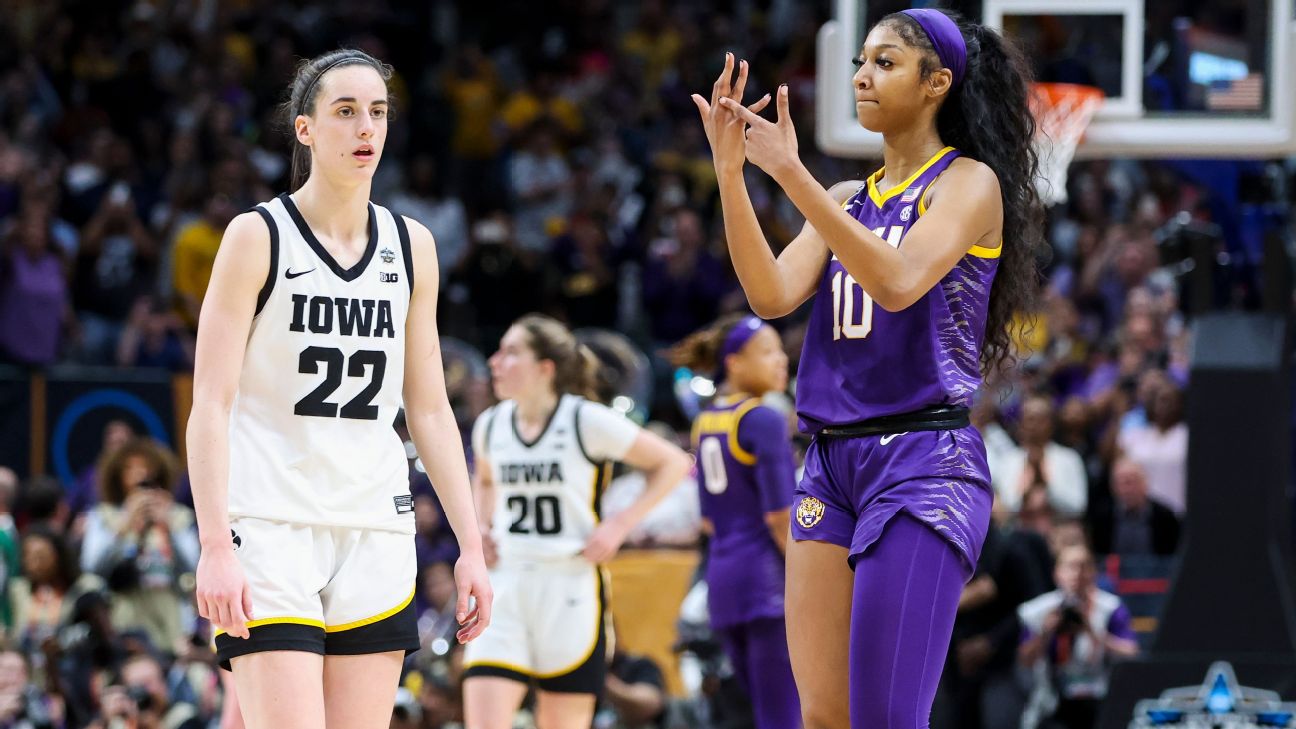
The Origins of a Rivalry
The story of Angel Reese vs. Caitlin Clark didn’t begin in the WNBA. Its roots stretch back to college basketball’s biggest stage, when LSU and Iowa clashed in the 2023 NCAA Women’s Basketball Championship game. It was the perfect storm: two programs hungry for glory, two stars at the height of their powers, and millions of viewers tuned in to watch a showdown that would change women’s basketball forever.
Both Reese and Clark brought everything to that game — unmatched skill, fiery competitiveness, and a presence that demanded attention every time they touched the ball. Clark dazzled with her deep three-pointers and court vision. Reese countered with relentless rebounding, rim protection, and a swagger that matched her production. The energy was raw, the stakes monumental, and the outcome unforgettable.
The defining flashpoint came late in the contest. After LSU sealed the title, Reese turned toward Clark and flashed the now-iconic “You can’t see me” gesture. In seconds, the moment went viral. To some, it was unsportsmanlike — a shot at Clark when she was down. To others, it was pure showmanship, the kind of bravado that has always defined great athletes on the biggest stage. The irony? Clark herself had made the same gesture earlier in the tournament, aimed at a different opponent. The symbolism was undeniable: both were competitors cut from the same cloth, unafraid to stir emotion, unafraid to own the spotlight.
Competition, Not Hatred

Despite how the moment was spun online, there’s little credible evidence that Angel Reese genuinely “hates” Caitlin Clark. Theirs is a rivalry born out of respect as much as conflict — a collision of elite talents whose competitive fire naturally spills into drama. In postgame interviews and media appearances, both players have acknowledged each other’s impact. Clark has praised Reese’s intensity and physicality. Reese, for her part, has emphasized the importance of being unapologetically herself, standing firm in her confidence and authenticity — values often misread as hostility.
The truth is simpler: Reese and Clark are competitors. Fierce ones. And fierce competitors aren’t meant to be friends on the floor. Their battles are fueled by mutual drive, not personal animosity.
A Rivalry Amplified
Still, the rivalry has taken on a life of its own, thanks to the echo chamber of fans, media, and social platforms that thrive on conflict-driven narratives. Clips are shared without context. Quotes are framed for maximum clicks. And what began as a single gesture has snowballed into one of the most talked-about storylines in American sports.
In many ways, that amplification has been a blessing for women’s basketball. The Reese–Clark rivalry has drawn record-breaking audiences, filled arenas, and sparked national debates about competition, race, and gender in sports. It has given the WNBA two young stars with crossover appeal — athletes who transcend the game and force it into the mainstream conversation.
Both Reese and Clark have leaned into that responsibility. They’ve embraced their roles as leaders and cultural figures, understanding that the attention they bring elevates the sport as a whole. They are rivals, yes — but also co-authors of a story that is rewriting the future of women’s basketball.
Social Media and Public Perception
Scroll through YouTube Shorts, TikTok edits, or Twitter threads, and you’ll see it immediately: clips of Angel Reese and Caitlin Clark cut together like a prizefight trailer, soundtracked with dramatic music and captions asking, “Does Reese really hate Clark?” These viral posts have fanned the flames of a supposed feud, cementing the idea of animosity in the public imagination. But much of that tension is performative — a product of online culture, where conflict and controversy spread faster than context. Social media doesn’t just highlight competition; it magnifies it, stretching small gestures into sprawling narratives.
The reality is far less hostile. If anything, the so-called “Reese vs. Clark rivalry” has been rocket fuel for women’s basketball. Their clashes have boosted viewership to historic highs, filled arenas, and pushed the WNBA into daily sports conversations in a way not seen before. The rivalry is evidence of passion, not hatred — a testament to the kind of fire and intensity that defines elite athletes at the very top of their game.
The Bigger Picture: Respect and Representation

Beyond the highlight reels and viral clips, both Reese and Clark have used their platforms to champion causes bigger than themselves. Angel Reese has leaned into authenticity and empowerment, unapologetically challenging stereotypes and becoming a vocal advocate for Black women in sports. Her willingness to embrace confidence — and to be polarizing if necessary — has made her not just a player, but a cultural figure who demands representation and respect.
Caitlin Clark, meanwhile, has been hailed for her leadership and her game-changing ability to stretch the floor with her shooting and playmaking. She represents a new era of visibility for women’s basketball, one where generational talent isn’t hidden in the margins but celebrated on primetime broadcasts. Together, they embody different but complementary forms of representation — one pushing the boundaries of identity and voice, the other redefining excellence through performance and consistency.
Their rivalry isn’t about tearing each other down. It’s about pushing one another — and the sport itself — to new heights.
Conclusion
The notion that Angel Reese “hates” Caitlin Clark is largely a myth. What exists is fierce competition, amplified by fans and media. Their battles have boosted the WNBA, inspired millions, and shown that rivalry and respect can thrive side by side.


