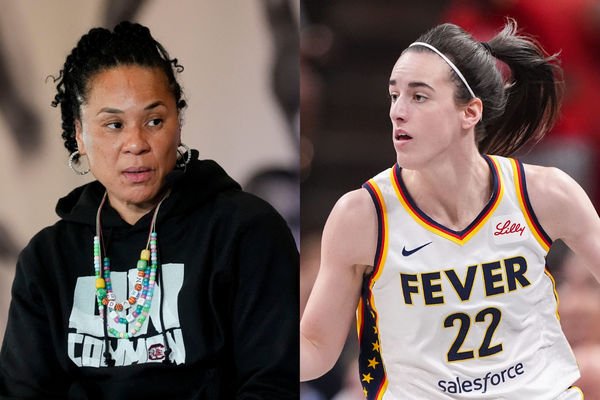
It’s no exaggeration to say Caitlin Clark is the beating heart of the WNBA right now. Her arrival has completely reshaped the league’s narrative. She has become a ratings magnet, a box-office draw, and a headline machine in ways that women’s basketball has rarely, if ever, experienced. Just a few years ago, in 2017, WNBA broadcasts averaged a modest 171,000 viewers. Today, with Clark on the court, audiences are tuning in by the millions, and arenas are selling out across the country.
Few people appreciate her impact more than Dawn Staley. A Hall of Famer, Olympic gold medalist, and head coach of the powerhouse South Carolina Gamecocks, Staley has spent her career building the women’s game. She has praised Clark before, even standing up and saying, “I want to personally thank Caitlin Clark for lifting up our sport.” Yet Staley’s most recent comments show a more complicated reality.
In her appearance on The Breakfast Club podcast, Staley made it clear that while she recognizes the good Clark has done, there are drawbacks. “I think it pulls people in,” she told host Charlamagne. “I think there are new fans that haven’t watched our game, and they really don’t know, so they’re only singularly focused on Caitlin. That’s their idol, that’s who attracts them.”
The numbers back this up. Clark’s Indiana Fever recently became the first WNBA franchise to surpass one million followers on Facebook — a groundbreaking achievement for the league. On Instagram, the Fever lead the pack with over 707,000 followers, well ahead of Angel Reese’s Chicago Sky at 584,000, and miles beyond the Connecticut Sun’s 114,000, despite the Sun being perennial playoff contenders. Clark has turned the Fever into not just a team, but a global brand.
And yet, Staley’s next words carried the weight of her concern. “But I just hope that they’ll open their eyes to the rest of the talent that is there. The product is incredible, and it’s in high demand… I’m looking forward to the next time they play, too. I’m gonna be glued in just like everybody else. I’m a fan.” She isn’t criticizing Clark, but rather pointing out that the league cannot afford to be defined by just one star.
Staley knows this firsthand. In the 2023–2024 NCAA championship game, her South Carolina team defeated Clark’s Iowa in front of nearly 19 million viewers — one of the most-watched college basketball games in history. But as Staley noted, much of the audience only had eyes for Clark. “We played Caitlin in the national championship last year, right? … I know they saw us. I know they saw Kamilla Cardoso… Ashlyn Watkins… Tessa Johnson… Malaysia Fulwiley do some incredible things. So, so open your eyes up to seeing, you know, outside of Caitlin.”
Her frustration is understandable. South Carolina has been a dynasty, winning national championships in 2022 and 2024 and reaching the Final Four almost every year since 2015. Staley’s teams have consistently been among the best in the nation, producing stars who now shine in the WNBA. They deserve their share of the spotlight.
Clark’s journey, however, is different — and that’s where her magic lies. Iowa had only one Final Four appearance in school history, back in 1993. Then Clark arrived, and suddenly the Hawkeyes were playing in back-to-back national championship games. She torched defenses with logo-range three-pointers, shredded game plans designed by Hall of Fame coaches like Geno Auriemma and Staley, and turned matchups against Reese, Paige Bueckers, and Cameron Brink into can’t-miss events that felt more like NBA rivalries than college games.
The buzz wasn’t just about points scored. It was about the underdog narrative. Clark wasn’t the consensus top recruit like Bueckers. She didn’t join a blue-blood powerhouse like Reese or Brink. She chose Iowa — and turned it into a national powerhouse. Fans love greatness, but they love unexpected greatness even more. That’s why Clark resonates in ways others haven’t.
Still, Staley is right: the WNBA is bigger than one player. Angel Reese has become a cultural icon. Paige Bueckers remains one of the most talented guards in the country. Cameron Brink brings elite two-way play. And rising star JuJu Watkins at USC may have the tools to generate Clark-like buzz in the years ahead.
But for now, Clark stands alone. When she steps on the floor, she’s not just another player. She’s the main event. The WNBA may be an ocean of talent, but Caitlin Clark is the wave everyone sees first — and she’s carrying the rest along with her.
Caitlin Clark celebrates Bonner’s milestone and embraces LSU rival’s shoutout.
However, to Clark’s credit, she doesn’t just command the spotlight—she shares it. Especially with those who came before her and those rising alongside her.
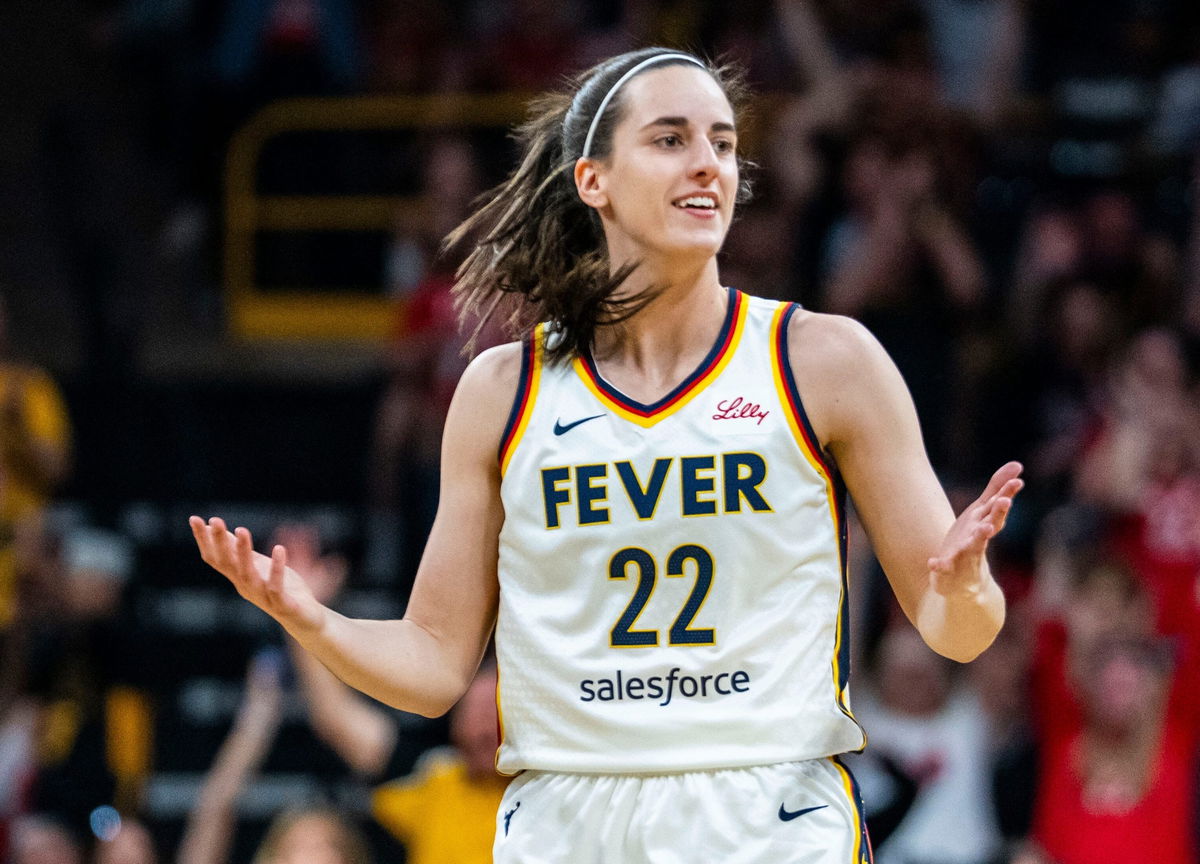
In a recent Fever press conference, as reported by Chloe Peterson, the Des Moines native made it a point to recognize a moment few were talking about. “Honestly, (DeWanna Bonner) moving into third all-time, I don’t see people talking about that enough,” she said. “I don’t think people realize how big of a deal that is. It’s hard to believe that Tina Charles and (Diana Taurasi) are the only two people in front of her. Two people who have also given a lot to the game.”
via Imago
Bonner’s seventh point against the Chicago Sky (on Saturday) pushed her past Tina Thompson on the WNBA’s all-time scoring list. Now with 7,489 career points, Bonner sits behind only Charles and Taurasi—and with just 249 points between her and second place, she’s not done. Caitlin made sure we didn’t overlook it.
She extends that same grace to rivals, too. When Flau’jae Johnson name-dropped her in a song—“Double C on my jacket, like I’m Caitlin Clark”—Clark didn’t scoff. She smiled. “She’s incredible,” she told USA Today’s Meghan Hall. “Her music is really great… I’ve honestly been a big fan since we played them at LSU.” She even knew the lyric was coming.
Clark could soak in the spotlight alone. But she doesn’t. That’s part of her magic. So, what do you think—does the spotlight on Caitlin Clark shine justly?


